

If you're new to house cleaning, or English isn't your first language, pricing jobs can feel scary.
You don't want to undercharge.
You don't want clients to argue.
You don't want to look unprofessional.
And you definitely don't want to lose money without even realizing it.
You might be Googling right now:
- "How much should I charge for cleaning?"
- "What do cleaners charge in 2026?"
- "How do I price a cleaning job when I'm new?"
Here's the truth:
There's no single price that works for everyone.
Not for 2026.
Not for any year.
Every cleaner's costs are different.
But there IS a simple system you can learn.
This guide shows you the complete method, step by step, with:
- no complicated math
- simple English
- clear examples
- interactive calculators
If you follow these steps, you'll know exactly what to charge — and why.
Let's start.
•Rule #1: Never Charge by the Hour
Many new cleaners start by charging hourly.
This is a mistake.
Here's why:
When you charge hourly, getting faster means earning LESS.
You clean a home in 3 hours = $150
Next month you're faster: 2 hours = $100
You get paid $50 for getting better at your job!
⚠️ The Hourly Pricing Trap
At current speed:
😱 Now you get 20% faster (great job!)
💡 This is why pros use flat-rate pricing!
You get paid for the RESULT, not the time.
Hourly pricing also causes problems with clients:
- "You're cleaning too slow."
- "You didn't clean enough."
- "Why is it so much for only two hours?"
Professional cleaners use flat-rate pricing (also called scope-based pricing).
The client knows the price upfront.
You get paid for the result, not the time.
Everyone knows what to expect.
•Your Price Comes From YOUR Costs
Your cleaning price doesn't come from:
- what other cleaners charge
- what you "feel" is fair
- what the client wants
- what you saw on Facebook
Your price comes from your real business costs.
Every cleaning business is different.
Every cleaner has different:
- rent or mortgage
- fuel costs
- insurance
- vehicle type
- city expenses
- speed and efficiency
- goals and needs
This is why no one can give you a universal price.
But you CAN learn the formula that works for every business.
•The 7-Step Pricing Method
Here's the exact system professionals use:
✓Step 1: Estimate the Cleaning Time
Use this simple baseline:
Standard Clean: 1 hour per 850 sq ft
(Assuming 2 people live in the home)
Then adjust for conditions:
If there are pets:
Add 5-25% more time depending on pet hair.
Light shedding = 5%
Heavy shedding = 25%
If the home is dirtier than normal:
Add 5-25% or more.
If it's going to take you twice as long, double the time.
If the home is cluttered:
Cleaning around trinkets and valuables takes extra time.
The risk of damage is also higher.
Add 15-30% and consider if you even want the job.
Deep Clean:
1.5× the standard clean time
More detail, more scrubbing, more corners.
Move-Out Clean:
At least 3× the standard clean time
Includes inside cupboards, behind appliances, inside fridge/oven.
The kitchen alone can take hours.
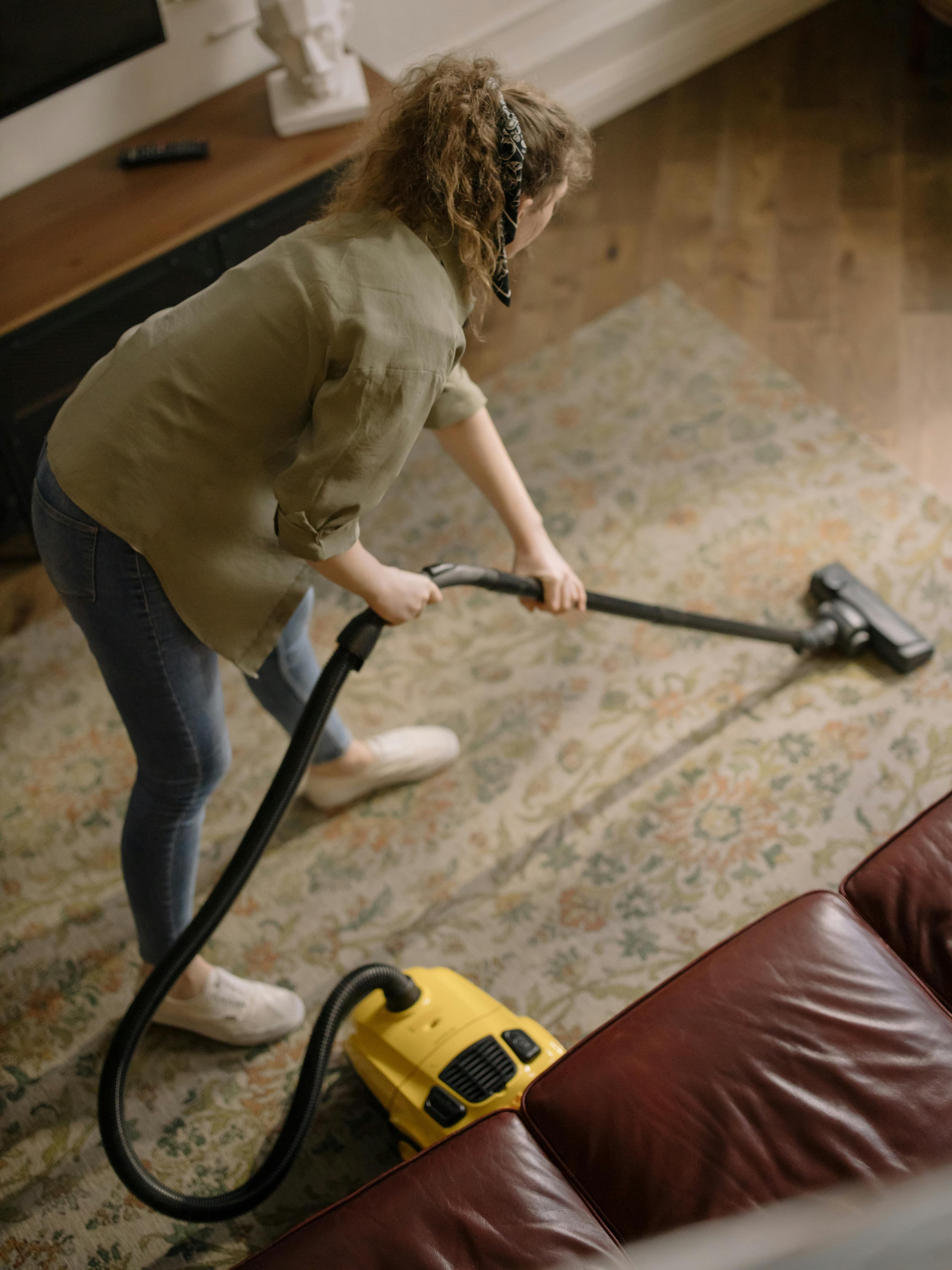
This is what you're pricing: professional cleaning that transforms homes
The best way to learn your real speed?
- Time yourself on different homes
- Record yourself working (video on phone)
- Watch the video and notice wasted steps
- Adjust your process
You'll get faster and more confident with practice.
✓Step 2: Set a Living Wage
What's a living wage?
A living wage is enough money to pay for:
- rent or mortgage
- food
- transportation
- healthcare
- childcare (if needed)
- basic savings
It's NOT minimum wage.
It's what someone needs to live with dignity.
A living wage promotes:
- loyalty
- respect
- long-term employment
- quality work
- low turnover
Turnover is expensive, stressful, and dangerous for your reputation.
A well-trained cleaner is the base of your success.
Treat them well.
How to find the living wage in your area:
Option A: MIT Living Wage Calculator (US)
Go to: livingwage.mit.edu
Select your state and county.
Look at "Living Wage" for 1 adult (or 1 adult + children if that's your situation).
Option B: Google Search (Any Country)
Search: "Living wage [your city] 2026"
or
"Cost of living cleaner pay [your city]"
If you can't find a living wage, use $20-25/hour as a starting point in most North American cities.
Adjust based on your local cost of living.
✓Step 3: Add Payroll Burden
What's payroll burden?
When you pay a cleaner $20/hour, you don't actually pay just $20.
You also pay:
- employer's share of taxes
- workers' compensation insurance
- unemployment insurance
- liability insurance
- benefits (if you offer them)
This usually adds 15-25% on top of the base wage.
Simple Rule:
If you pay a cleaner $20/hour base wage,
your real cost is about $24-25/hour after payroll burden.
If you're a solo operator (just you), you still need to account for this.
You're paying yourself, and you need to cover your taxes and insurance.
✓Step 4: Add Supplies + Equipment Wear
Supplies and equipment cost money on every job:
Supplies:
~$5
Equipment wear:
~$3
Total per standard clean:
$8
Supplies include cleaning solutions, sponges, scrub brushes, pads, and cloths.
Equipment wear includes the cost of vacuums, mops, and other tools spread over their lifespan.
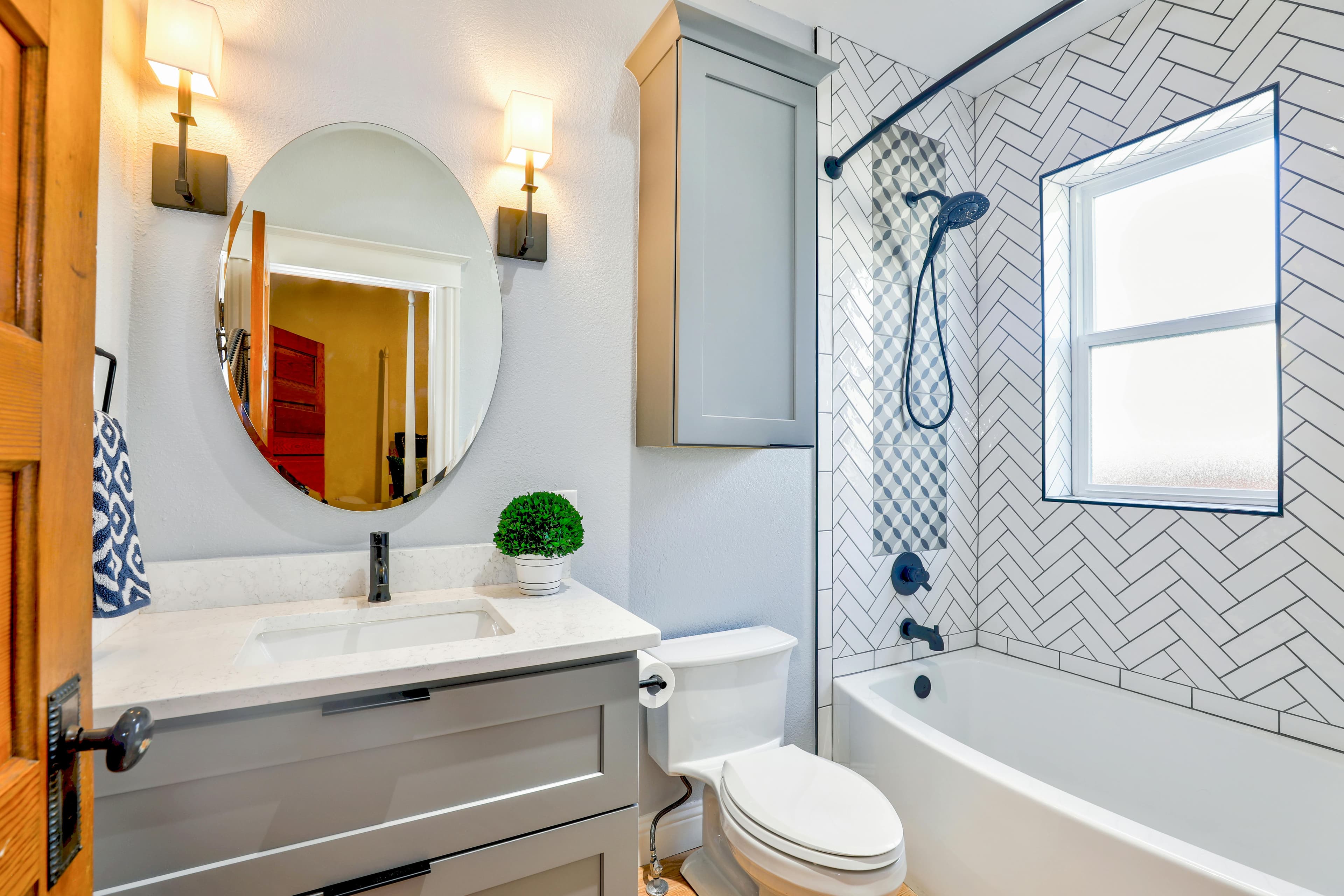
A standard clean delivers results your clients will love
✓Step 5: Add Travel, Admin, and Off-Site Time
This is where most cleaners lose money without realizing it.
🕐 The Hidden Hour Calculator
How much time does this job REALLY take?
Time Breakdown:
That's 42% of the total job time you might forget to charge for!
Real Total Time:
= 207 minutes of actual work
💡 Lesson: A "2.0-hour cleaning job" is really a 3.4-hour commitment. If you only charge for cleaning time, you're working 87 minutes for free.
✓ Travel Time (simple rule)
1.5 minutes per km (or 2.5 min per mile)
This is round-trip time from your location to the client and back.
Double this time for move-outs.
Triple it for construction cleans (more traffic, slower roads).
✓ Admin Time
~15 minutes per job
What's admin time?
Admin time includes:
- Marketing (posting ads, responding to inquiries)
- Estimating (site visits, quotes)
- Invoicing (creating and sending invoices)
- Collecting payments
- Banking (depositing checks, reconciling accounts)
- Bookkeeping (tracking expenses, preparing taxes)
All of this is work time, even though you're not cleaning.
✓ Setup + Pack-up Time
~17 minutes per job
7 minutes to set up equipment and supplies
10 minutes to pack up and secure everything
✓ Off-Site Cleaning Time
~20-30 minutes per job
Laundry (microfiber cloths, mop heads)
Cleaning equipment (vacuum filters, mop buckets)
Restocking supplies
Most cleaners forget about laundry time completely.
Those microfiber cloths don't wash themselves!
If you forget to include these times, you're working for free.
A "2-hour cleaning job" is really closer to 3 hours of total work time.

Your skill and care deserve fair compensation
✓Step 6: Add Overhead
What's overhead?
Overhead = all the business bills you pay every month, whether you have jobs or not.
Examples of overhead:
- Insurance (liability, vehicle, workers' comp)
- Fuel and vehicle maintenance
- Car payment or depreciation
- Phone and internet
- Marketing and advertising
- Website hosting
- Accounting and bookkeeping
- Banking fees
- Uniforms and branded items
- Software subscriptions
- Business license and permits
Every cleaner's overhead is different.
This is why copying someone else's prices doesn't work.
You need to know YOUR numbers.
How to Calculate Your Overhead Per Job:
- Add up all your monthly overhead costs
- Count how many jobs you do per month
- Divide total overhead by number of jobs
Example:
Monthly overhead: $2,000
Jobs per month: 40
Overhead per job: $2,000 ÷ 40 = $50
✓Step 7: Add Your Profit Margin
What's profit margin?
Profit is the money left over after you pay all your costs.
It's what keeps your business alive and growing.
Profit protects you during:
- Slow months (winter, holidays)
- Emergencies
- Sickness
- Car repairs
- Equipment failures
- Future growth
Aim for 30-50% profit margin
(if your market allows it)
Profit isn't greed.
Profit is survival.
Profit is freedom.
Complete Example: Pricing a 1200 sq ft Home
The Job:
- • 1200 sq ft home
- • 2 bedrooms, 2 bathrooms
- • Standard clean
- • Light pet hair (10% time adjustment)
- • 10 km away from your location
Step 1: Cleaning Time
1200 sq ft ÷ 850 = 1.41 hours base time
+ 10% for pet hair = 1.41 × 1.10 = 1.55 hours
(round to 1.6 hours or 96 minutes)
Step 2: Labor Cost
Living wage: $22/hour
Cleaning time: 1.6 hours
Labor cost: 1.6 × $22 = $35.20
Step 3: Payroll Burden (20%)
$35.20 × 1.20 = $42.24
Step 4: Supplies + Equipment
$8 per job
Step 5: Hidden Time
Travel: 10 km × 1.5 min = 15 min (0.25 hours)
Admin: 15 min (0.25 hours)
Setup/Pack: 17 min (0.28 hours)
Off-site: 25 min (0.42 hours)
Total hidden time: 72 min = 1.2 hours
Hidden time cost: 1.2 × $22 × 1.20 = $31.68
Step 6: Overhead
$50 per job (your calculated overhead)
Total Costs So Far:
Labor: $42.24
Hidden time: $31.68
Supplies: $8.00
Overhead: $50.00
Total: $131.92
Step 7: Add 40% Profit Margin
$131.92 ÷ 0.60 = $219.87
(rounds to $220)
Your quote for this job:
$220
This price covers ALL your costs and gives you room for growth.
Let the calculator do the math for you
•Does Your Current Rate Cover Your Costs?
If you're already charging a rate, use this calculator to check if it's enough:
💰 Does Your Rate Cover Your Costs?
Check if your current hourly rate is profitable
Insurance, fuel, vehicle, phone, internet, marketing, etc.
Cost Breakdown (Per Hour):
You're Losing Money!
Your rate doesn't cover your costs
⚠️ Action Required:
You need to charge at least $110/hour to break even and have a safety margin. For healthy profit (30%), charge $127/hour.
•"This Feels Overwhelming..."
If this seems like a lot of steps, you're not alone.
Many cleaners feel:
- Overwhelmed by the math
- Unsure about their numbers
- Worried about making mistakes
- Scared to charge "too much"
You don't need to do all this math by hand.
That's why I built the free calculator.
It does ALL of these calculations for you in 30 seconds.
•Use the Free Calculator
The calculator handles:
- Square footage calculations
- Pet and dirt adjustments
- Deep clean multipliers
- Travel time estimates
- Admin and setup time
- Supplies and equipment
- Overhead allocation
- Payroll burden
- Profit margins
- Final flat rate price
The free calculator gives you accurate estimates.
If you want to customize your labor rate, overhead, and profit margins, you can upgrade to Pro for $9/month.
•Final Thoughts
You can't build a successful cleaning business by guessing prices or copying what others charge.
Your price must come from YOUR costs.
This guide showed you:
- The complete 7-step pricing method
- Why hourly pricing doesn't work
- How to account for hidden costs
- A real example with actual numbers
- Interactive tools to prove the concepts
You deserve to earn enough to live well.
Your business deserves to profit.
Your prices must reflect both.
Caleb Skinner
IICRC journeyman-trained with 20+ years in the cleaning industry. Built PriceThisJob to help new cleaners avoid the pricing mistakes that cost real money and real stress.
Try the free calculator